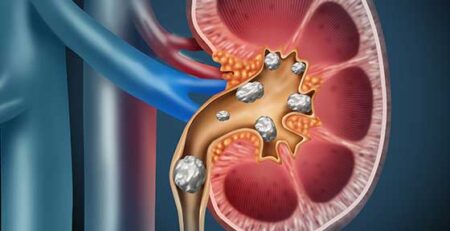
Kidney stones are hard, rock-like deposits that form in the kidneys, two organs that filter waste and extra fluid from the body. Kidney stones typically develop when there is too much waste and not enough fluid in the kidneys. Your body’s waste can include minerals and other substances that combine to form stones, ranging in size from a grain of sand to a size of a pea, or even as large as a ping pong ball.
Types of Kidney StonesThere are two main types of kidney stones: calcium stones and noncalcium stones, High levels of the mineral calcium in the urine account for about 80 percent of all kidney stones. Calcium can bind with other substances, such as oxalate and phosphate, in the urine to form stones
What Causes Kidney StonesWhile medical conditions such as diabetes, high blood pressure, and obesity can increase the risk
of kidney stones, healthy people can also develop them.
Factors that may contribute to the formation of kidney stones include:
- Not drinking enough water
- Not getting enough calcium
- A diet high in salt or sugar
- Eating large amounts of oxalate-rich foods (such as nuts, spinach, chocolate, and certain teas)
- Drinking colas, which contain phosphate and have a high sugar content
- Consuming too much protein
- A lack of citrate, a substance that helps prevent stones from forming
- Family history and genetics